Vehicles in Awkward Places
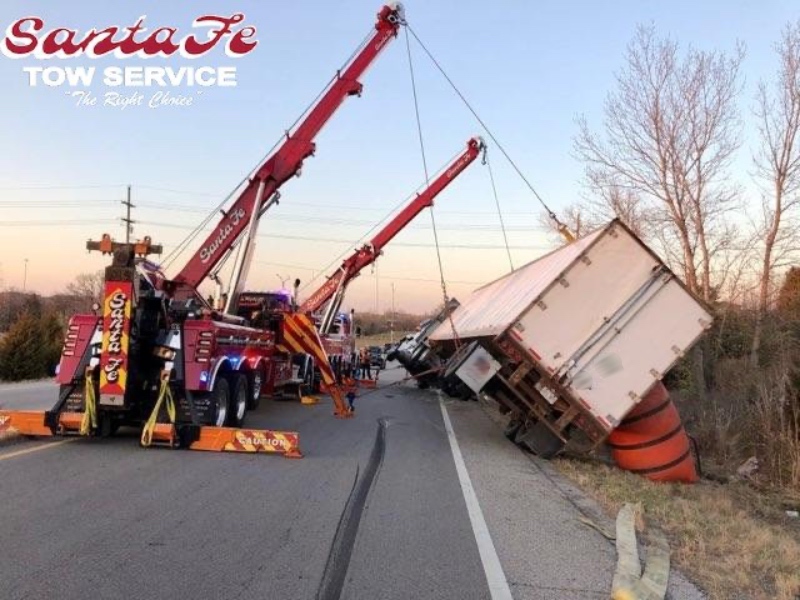
A loaded car carrier uses nearly every available foot of space. Cars can sit above the tractor, on angled decks, and only a short distance from vehicles below them. After a rollover or major collision, any I-70 heavy towing intervention may require us to reach and remove several cars before the damaged carrier itself is ready to move.
From the ground, we might be looking at cars that are still strapped down, others that have shifted, and decks that no longer sit where they are supposed to. The obvious question is how to recover the carrier. But before we can answer that, there is a more immediate one: what happens when the only way down for those cars has been damaged, twisted, or blocked?
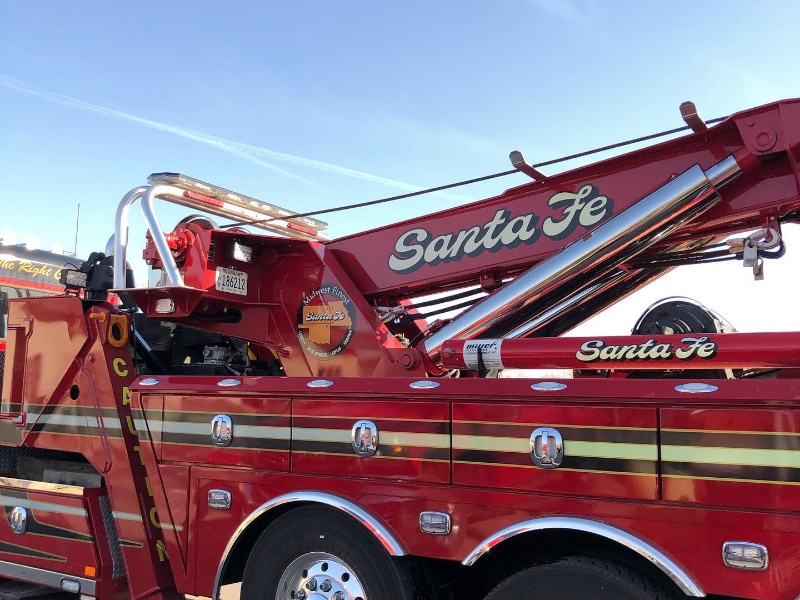
The Loading System May No Longer Work Normally
A carrier uses decks and ramps to position each vehicle at different heights. After an accident, those components may be bent, twisted, or unable to move as intended.
A car that originally drove up a ramp might now be sitting on a deck that cannot return to its normal unloading position. We then have to consider how to get the car down when its original route off the carrier no longer exists.
Upper-Deck Cars Create a Different Access Problem
A car on the lower level may be relatively close to the roadway. A vehicle several feet above it presents another problem entirely.
If the carrier remains upright but damaged, a deck can be stuck at an angle. After a rollover, the loading structure may be sideways. Before we remove anything, we need to understand what is still supporting the cars and how changing one position could affect another.
Sometimes Another Car Is in the Way
The original loading order does not necessarily work in reverse after a wreck. During car carrier recovery on I-70, we may need to create a completely different unloading sequence.
We look at questions including:
- Which decks and ramps can still move?
- Does each car remain secured?
- Which vehicles can roll and steer?
- Are any cars touching?
- Where does damaged framework limit access?
- Where can we stage removed vehicles?
That can turn one carrier into several smaller recovery problems.
A Car That Runs May Still Be Difficult to Remove
Mechanical condition is only part of the equation. During heavy-duty recovery near I-70, an operable car may still have no usable path to the ground if its deck or ramp has been damaged.
Once we get it down, it still needs transportation. It was cargo before the wreck, and reaching the pavement does not complete its trip.
Each Removal Changes the Carrier
Taking cars off changes what remains. During tractor-trailer recovery around I-70, every removal reduces total weight and changes where the remaining weight sits.
We have to consider the carrier in its current state rather than treating the original fully loaded weight as a fixed condition throughout the job.
Eventually, the Carrier Has to Move Too
After the cars are addressed, heavy truck towing along I-70 may still be necessary. Removing the load does not correct damaged tires, suspension, axles, decks, or structural components.
The cars also have to leave. With car transport recovery near I-70, some may require towing because of collision damage while others need continued transportation because their original carrier cannot finish the trip.
Santa Fe Tow Service: Decades of Experience Behind Our I-70 Heavy Towing
Santa Fe Tow Service grew from a towing career that started when Jon Kupchin was just seventeen. He began driving a tow truck for his family’s Santa Fe Body Shop, which his parents established in 1963. After discovering how much he enjoyed the work, Jon built Santa Fe Tow Service around the principles he learned from his parents: work hard, know the job, take care of customers, and take care of employees.
What began with one truck and one driver has grown to more than 80 trucks and 75 employees. Our 9,000-square-foot headquarters sits on a five-acre property in Lenexa, Kansas, and our operation has expanded to Kansas City, Kansas, Blue Springs and Joplin, Missouri, with property in Quapaw, Oklahoma. When customers need I-70 heavy towing, they are calling a company built from decades in the towing business and a one-truck beginning that grew into a substantial Midwest operation.
FAQs
Why are upper-deck cars difficult to remove?
The ramps or decks used to load them may be damaged or unable to move normally. Their height also limits access.
Can a car run but still be impossible to drive off?
Yes. The car may be operable while damage to the carrier blocks its normal unloading route.
Do cars have to come off in their original loading order?
No. A wreck can change access and deck positions enough to require a different sequence.
What if two cars shift against each other?
We have to consider how both are supported before separating them because moving one can affect the other.
Where do cars go after removal?
They need to be staged and then transported from the scene. Damaged cars may require towing.