A Different Kind of Airport Pickup
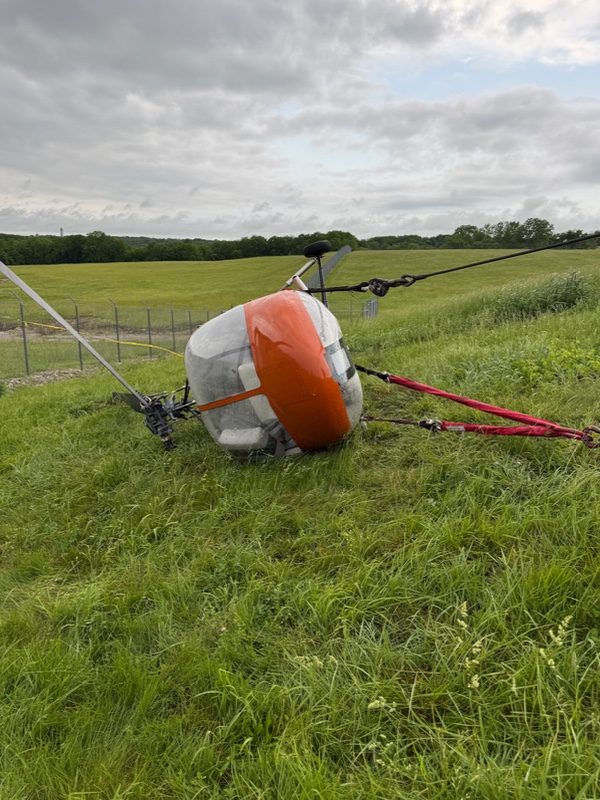
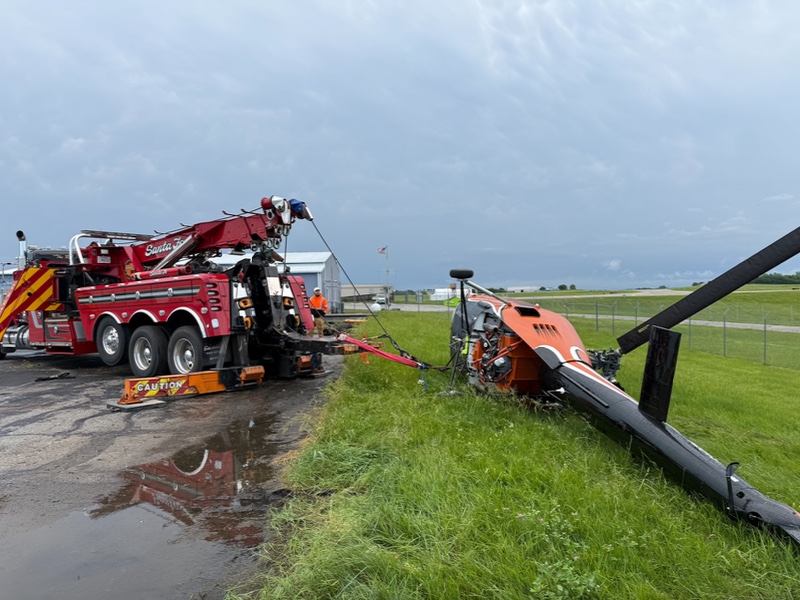
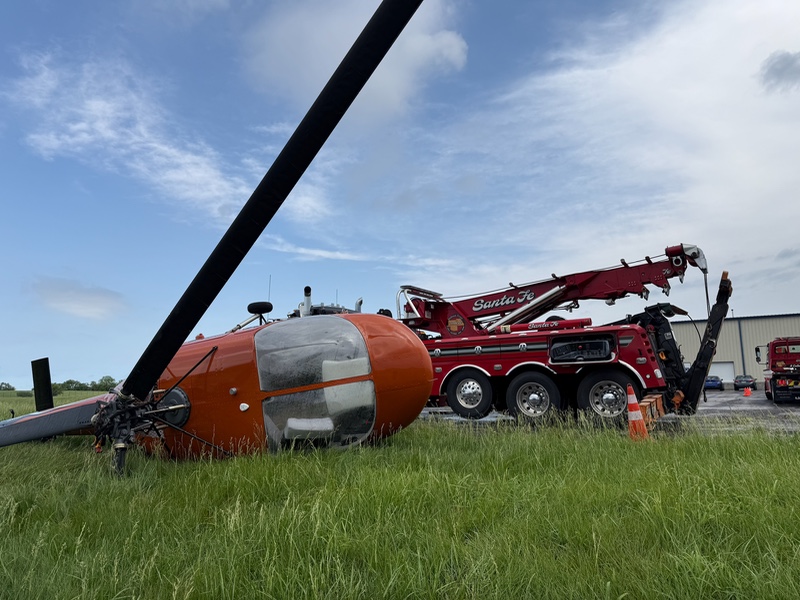
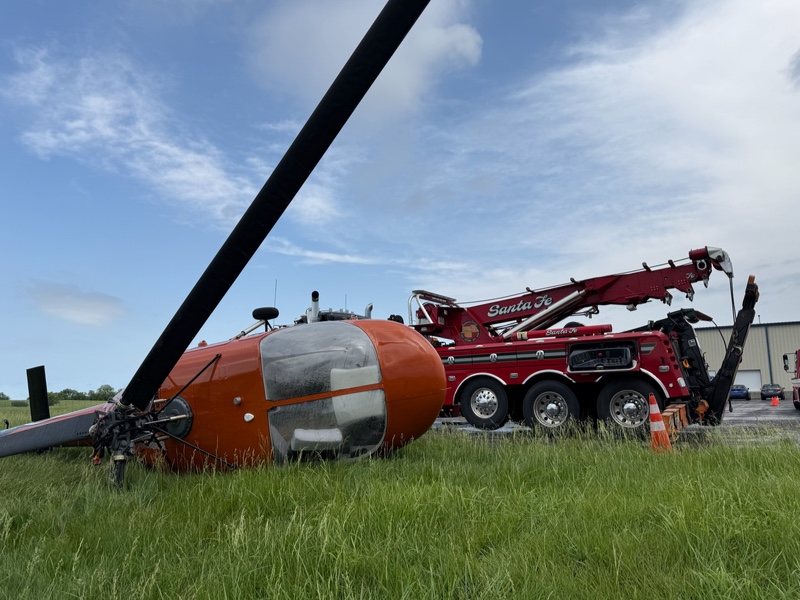
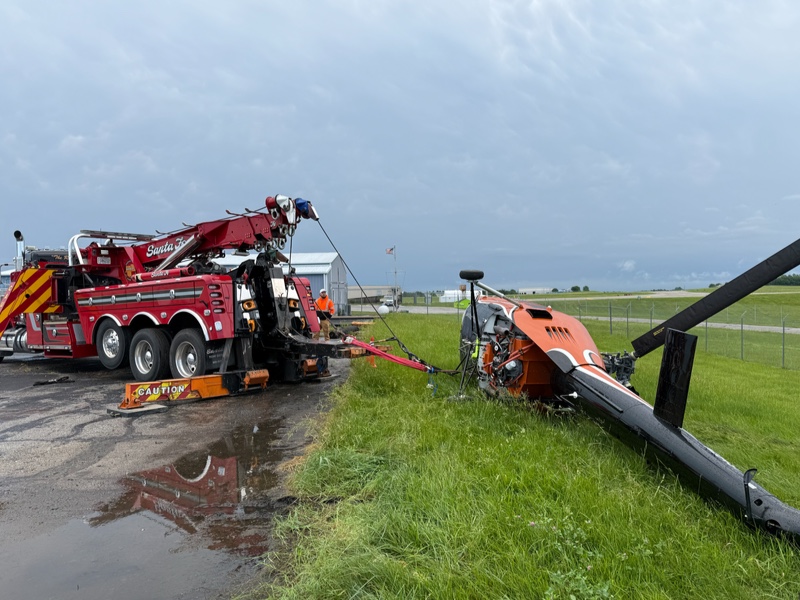
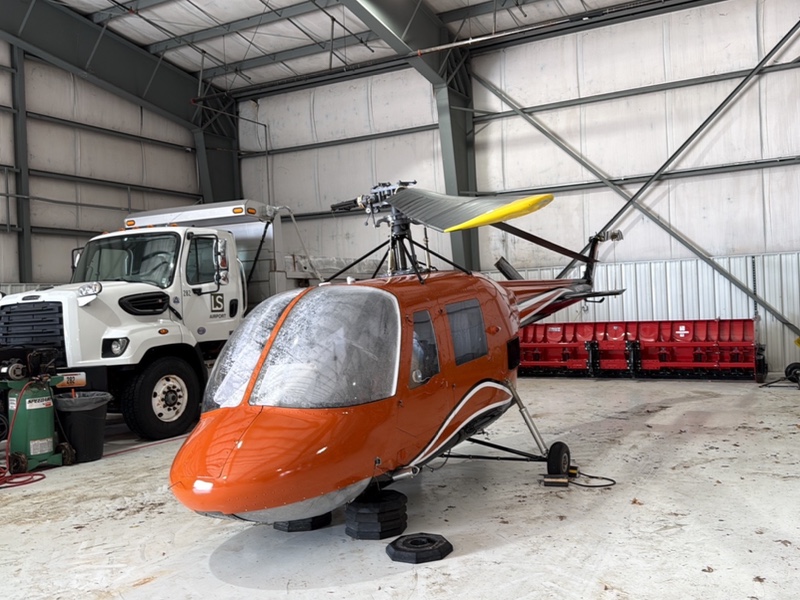
Airports are designed for smooth arrivals. But this helicopter needed help after it came back down. Its rotor had been damaged, the aircraft could not move. Its owners needed it returned to the hangar. Our Lees Summit rotator service team brought a rotator, rollback, and support vehicle to handle the lift. This wasn’t your average tow.
Setting Up for a Controlled Lift
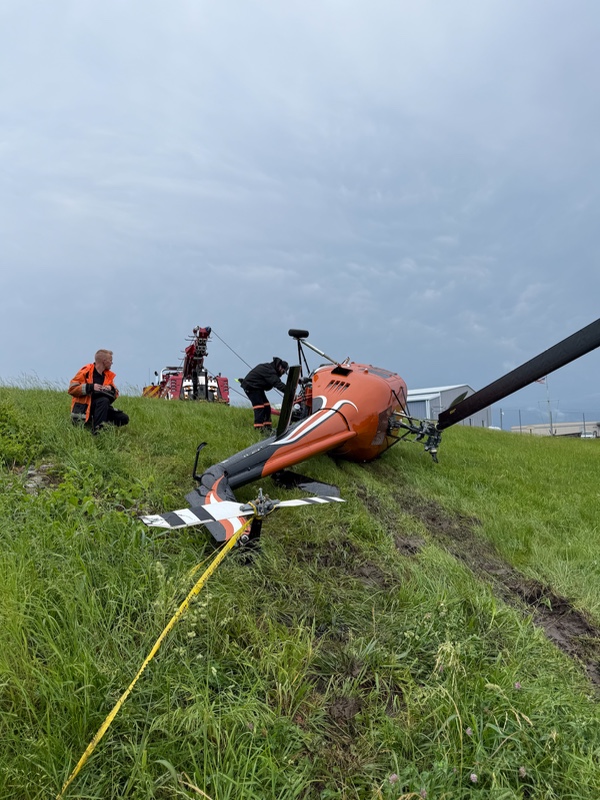
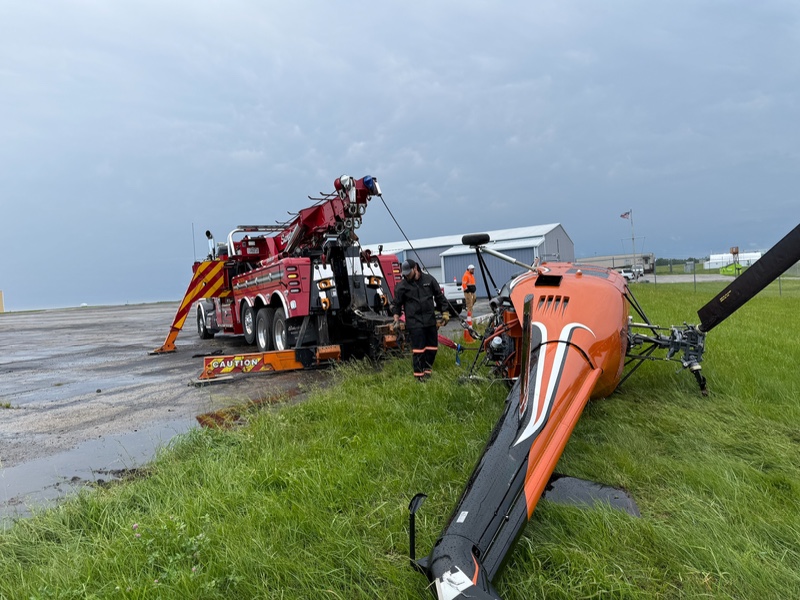
Airport security, an FAA official, and the helicopter’s owners were already at the scene when our crew arrived. Santa Fe Tow Service sent three operators to handle this call: our very own Kyle, Barry, and Daniel handled the scene.
The helicopter could not move under its own power, so this job needed a controlled lift and a careful transfer. An aircraft is very different from the average vehicle, with weight carried through a narrow landing gear setup and components that can suffer more damage from a poor lifting point. We brought a rotator, a light-duty rollback, and a support vehicle.
Assessing the Helicopter
We started by looking at how the helicopter had landed, where the damaged rotor sat, and how much room we had around the aircraft. The airport setting gave us open pavement, but that did not mean we could rush the setup. Our crew also had to work around airport personnel and follow the direction of the FAA official on scene.
The damaged rotor required extra clearance during every move. We checked the helicopter’s position, selected stable lifting points, and planned where the rollback would sit before putting tension on the rigging. Moving the rollback after the helicopter was hanging would have added risk, so the truck needed to be in the right place from the start.
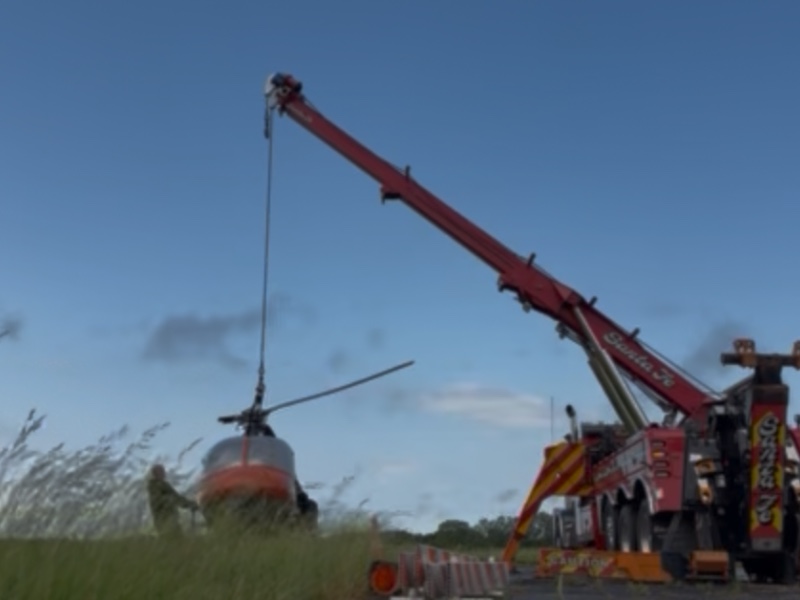
Lifting and Uprighting the Aircraft
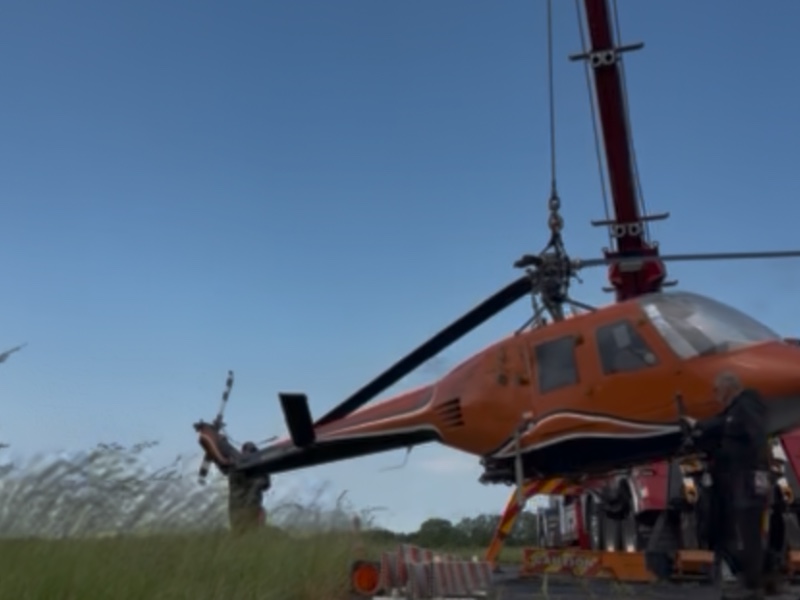
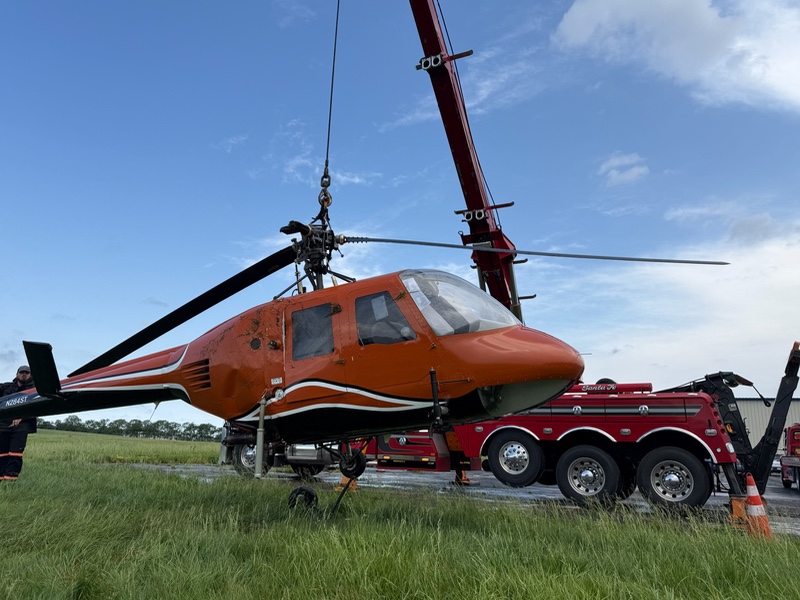
The rotator gave us the reach and lifting control needed to pick the helicopter up from where it had come to rest. We raised it gradually, watched the landing gear, and brought the aircraft back upright. Kyle, Barry, and Daniel stayed in clear communication throughout the lift so each part of the helicopter remained visible.
Once the helicopter sat upright, we held it with the rotator while positioning the light-duty rollback beneath it. A helicopter does not roll onto a bed like a car with four good tires. The rotator carried the weight while the rollback provided a stable platform for the trip back to the hangar.
Transport Back to the Hangar
This Lees Summit rotator service job required two separate lifts. The first lift uprighted the helicopter and placed it on the rollback. After the rollback carried it to the hangar, we used the rotator again to remove the aircraft from the bed and lower it onto the ground.
The main steps included:
- Inspecting the aircraft and damaged rotor
- Choosing clear lifting and rigging points
- Uprighting the helicopter with the rotator
- Placing it onto the light-duty rollback
- Transporting it to the hangar
- Lifting it from the rollback and setting it down
The complete Lees Summit rotator service call took about two hours. That covered the initial setup, both lifts, the short transport, and the final placement near the hangar. Our Lees Summit rotator service team worked at a measured pace because one rushed movement could have shifted the delicate aircraft or placed more strain on its damaged parts.
Santa Fe Tow Service Brings Its Lees Summit Rotator Service to Complex Recovery Work
Santa Fe Tow Service grew from one truck and one driver into a regional operation with more than 80 trucks and 75 employees. That growth gives our Lees Summit rotator service team access to the kind of fleet depth needed for aircraft, heavy equipment, commercial vehicles, and other calls that fall outside routine towing.
Our family-run company has roots dating back to the Santa Fe Body Shop in 1963, and we still work from the same basic idea: know the job, take care of people, and show up prepared. Lees Summit rotator service may involve a highway rollover one day and an airport recovery the next, which is why experience across different types of calls matters.
FAQs
Can a tow truck lift a helicopter?
A heavy rotator can lift some helicopters when the aircraft weight and rigging plan fall within its limits. The crew must use approved lifting points and account for balance before raising it.
Why would a helicopter need a rollback truck?
A rollback provides a flat platform for moving an aircraft that cannot roll or fly. It can also reduce stress on damaged landing gear during transport.
How are lifting points chosen on a damaged aircraft?
The recovery crew reviews the aircraft structure, weight distribution, and damaged areas. Owners, mechanics, or aviation officials may help identify points that can carry the load.
Can a damaged rotor make recovery more difficult?
Yes. A bent or broken rotor can shift, catch on equipment, or create clearance problems. Crews leave extra room around it and monitor it throughout the move.
Who supervises a helicopter recovery at an airport?
Airport personnel usually control access to the work area. Aviation officials and the aircraft owner may also observe or provide instructions related to the aircraft.
How long does it take to move a disabled helicopter?
A simple move may take a few hours. Setup, aircraft condition, distance, and the number of lifts all affect the schedule.