A Familiar Scene on the Interstate
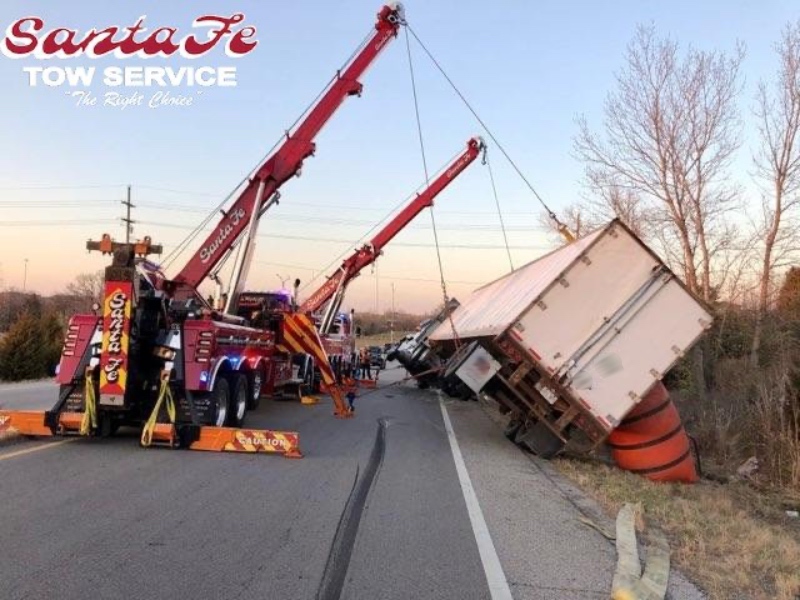
A semi-truck is built to articulate. The pivot point between cab and trailer is what makes tight turns possible and allows these rigs to handle loading docks and narrow city streets. Working I-44 semi towing, we see firsthand what happens when that flexibility turns against a driver. A jackknife is what happens when the cab and trailer stop functioning as a unit, and the scene left behind is rarely simple to clear.
We respond to the aftermath often enough to recognize the patterns. Cargo scattered, lanes blocked, a 70,000-pound rig sitting at an angle that was never the plan. Understanding how jackknife incidents develop is the best starting point for preventing them.
Why a Semi Jackknifes
Most jackknife events trace back to one core problem: the trailer pushing harder than the cab can absorb. When the rear wheels of the tractor lose traction, the trailer continues forward under its own momentum, and the two begin to fold against each other. The physics are straightforward, but the triggers vary.
Road conditions, load distribution, and braking technique all play a role. A lightly loaded trailer has less downward force on its wheels, making it more prone to sliding. Wet or icy pavement reduces the friction a driver depends on. Speed matters too. The faster a rig is moving when control starts to slip, the less time a driver has to correct.
Brake Lockup at the Drive Axle
When the tractor’s rear axle brakes lock up, the drive wheels stop rotating while the vehicle keeps moving forward. With the tractor slowed and the trailer still pushing from behind, the cab can swing outward. This is one of the most common triggers, especially during emergency stops on slippery roads. Modern anti-lock braking systems help, but only when they are properly maintained and functioning.
Speed and Curves Together
Taking a curve too fast shifts weight to the outside of the turn and reduces tire contact on the inside. A driver who then brakes mid-curve adds braking force to an already unstable situation. That combination of lateral force and braking creates one of the clearest setups for a jackknife, and experienced drivers avoid it by reducing speed well before entering any curve.
Habits That Lower the Risk
Prevention comes down to consistent practice. Drivers who avoid jackknife incidents tend to follow a clear set of habits:
- Reduce speed before entering curves, not during them
- Apply brakes gradually and smoothly rather than with sudden force
- Balance trailer loads evenly from front to back and side to side
- Inspect braking systems at every pre-trip to catch axle imbalance early
- Increase following distance on wet or cold roads to reduce the need for hard stops
Training reinforces all of it. A driver who understands how a jackknife develops can spot the warning signs before the trailer angle becomes unmanageable. That early recognition, even by a second or two, is often what separates a recovery from a collision.
When Prevention Fails: What Recovery Involves
Even well-trained drivers hit conditions that outpace their ability to correct. When a jackknife does happen, recovery requires more than attaching a line and pulling. Our crews often need to reposition the rig before any movement can begin, and separating the cab from the trailer is sometimes the first step.
Scene management matters just as much as the mechanical work. Truck incidents can block multiple lanes and require coordination with carriers, dispatch, and law enforcement. Crews who know the corridor and its traffic patterns work faster, and speed matters when a backed-up highway adds secondary risks.
Santa Fe Tow Service Has I-44 Semi Towing Covered, Day and Night
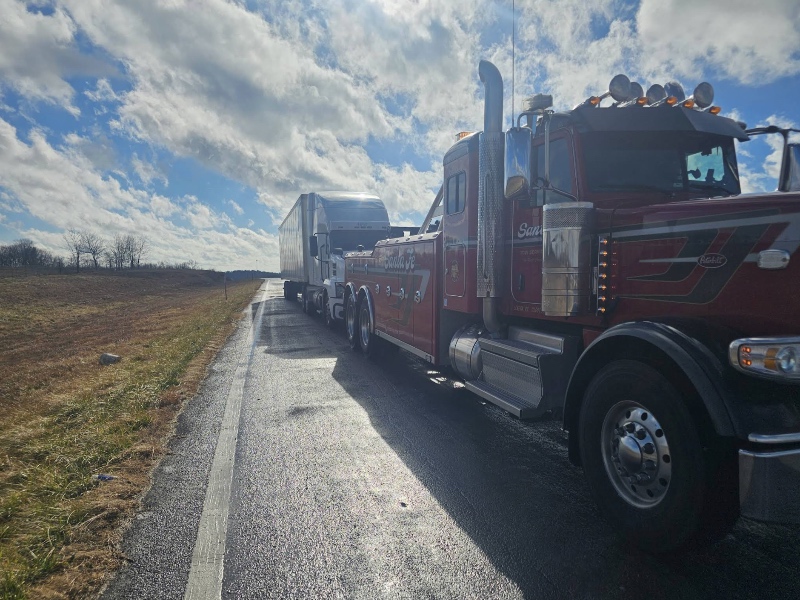
At Santa Fe Tow Service, I-44 semi towing is at the core of what we do. We run commercial recovery calls around the clock because breakdowns and jackknife incidents don’t follow a schedule. Our rigs carry the equipment for fully loaded commercial vehicles, and our I-44 semi towing response includes the lifts and rigging needed when a trailer has left its lane.
Experienced I-44 semi towing work means reading the scene, protecting cargo when possible, and clearing the road in a way that keeps traffic moving. Santa Fe Tow Service brings that level of experience to every call. When you need I-44 semi towing and you need it fast, we’re ready.
FAQ
What makes a semi-truck jackknife?
A jackknife happens when the tractor’s rear wheels lose traction and the trailer continues pushing forward, causing the cab and trailer to fold against each other at the pivot point. Slippery roads, speed, and abrupt braking are the most common contributors.
Does an empty trailer jackknife more easily than a loaded one?
Yes. A lighter trailer has less weight pressing its wheels into the road, which reduces traction. That lower friction makes the trailer more likely to slide during braking or cornering, increasing the risk of a fold.
How do anti-lock brakes reduce jackknife risk?
ABS prevents the drive axle wheels from locking up during hard braking. When wheels lock, the tractor slows while the trailer keeps pushing, which is exactly what starts a jackknife. ABS keeps the wheels rotating so the driver retains steering control and the braking force stays more balanced.
Can a driver recover from a jackknife once it starts?
Recovery is possible in the early stages if the trailer angle is still small. Releasing the brakes to restore rear-axle traction is the standard response. Once the fold reaches a certain angle, the physics work against recovery and the driver has very little control remaining.
What should a driver do the moment a trailer starts swinging out?
The instinct is to brake harder, but that usually makes it worse. Releasing brake pressure on the drive axle is the correct move, giving the rear wheels a chance to regain traction. Steering into the skid can also help if the angle is still recoverable.
How does cargo shifting mid-trip contribute to jackknifing?
Load shifting changes the weight distribution across the trailer’s axles in ways that weren’t present at departure. A heavier rear section reduces traction at the drive axle, and an uneven side-to-side shift can pull a trailer off its intended path during braking or cornering.